Olivia Scatcer Font: A Designer's Review
I was staring at a blank brand board for a high-end boutique skincare line when the usual suspects—those overused modern scripts and stiff serifs—just didn't feel right. The client wanted timeless romance, something that whispered luxury rather than shouting it. That is when I pulled up Olivia Scatcer Font. Within minutes of dropping the first letter onto my logo draft, the mood of the entire project shifted. It wasn't just another script; it felt like a breath of fresh air in a crowded room of generic typefaces.
The First Impression: Elegance in Contrast
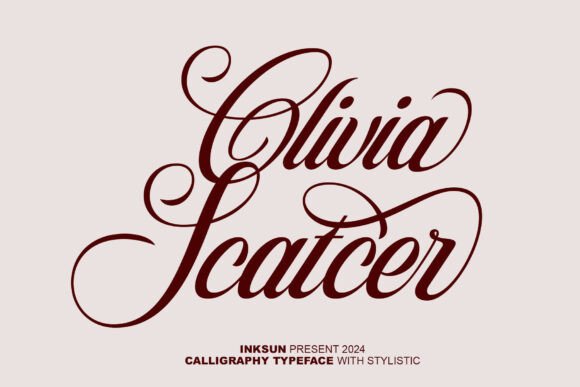
What immediately struck me about Olivia Scatcer was its dynamic range. As a designer who has sifted through thousands of Fonts, I know that true elegance lies in the details. This typeface features an exquisite contrast between thick downstrokes and delicate hairlines that mimic the natural flow of a fine nib pen. It doesn't look digital or rigid; it feels handcrafted yet perfectly polished.
When I tested it on a packaging mockup for a serum bottle, the font's personality shone through instantly. The curves are fluid, avoiding the sharp, jagged edges often found in lower-quality calligraphy styles. It carries a weight of sophistication that elevates even the simplest design assets. For a brand identity project aiming for grace and refinement, this premium font delivers exactly what the description promises: a world of timeless romance.
Testing Across Brand Touchpoints
A great display font needs to perform well beyond just the logo. To truly understand Olivia Scatcer, I pushed it across various mediums in a realistic workflow. Here is how it held up:
- Logo Design: In the primary mark, the font created a focal point that commanded attention without being overwhelming. The ligatures connected seamlessly, creating a unified symbol that felt bespoke.
- Packaging Labels: On a small jar label, the intricate details remained crisp. However, I found that sizing matters here. At 10pt, the hairlines were visible but required a high-quality print finish to avoid looking muddy.
- Social Media Graphics: For Instagram stories and post overlays, the font added a touch of class. Paired with soft imagery, it transformed standard product shots into editorial-style content.
- Business Cards: When used as the nameplate on a heavy-stock card, the embossing effect looked stunning. The negative space within the letters allowed the texture of the paper to show through beautifully.
- Web Headers: On the homepage hero section, the font loaded quickly and rendered sharply on both desktop and mobile screens, proving its viability for web design.
One specific moment stood out during the social media layout phase. I needed to highlight a short phrase like "Pure Radiance." Olivia Scatcer handled the kerning effortlessly, ensuring the spacing felt intentional rather than cramped. It proved itself as a versatile creative font capable of handling short phrases with authority.
Understanding Limitations and Best Uses
While Olivia Scatcer is a powerhouse for headlines and branding, honesty is key in any review. This is not a workhorse for body copy. Its decorative nature means that long paragraphs would be difficult to read and visually exhausting. If you are designing a brochure with dense text or a corporate report requiring formal neutrality, this script font is likely not the right tool.
It thrives as a display font, a headline typeface, or an accent element. Think of it as the jewelry of your typography system—it draws the eye and adds sparkle, but it shouldn't carry the whole outfit. Avoid using it for prices, legal disclaimers, or navigation menus where clarity is paramount. In those instances, readability should always trump style.
Mastering Font Pairing and Hierarchy
To make Olivia Scatcer sing, you need the right supporting cast. In my project, I paired it with a clean, geometric sans serif font for the body text and secondary headers. This combination created a perfect visual hierarchy. The stark simplicity of the sans serif allowed the ornate curves of the script to take center stage without competing for attention.
If you prefer a more traditional look, a classic serif font can also work well, especially for editorial design projects. The goal is to maintain balance. Since Olivia Scatcer is so expressive, keep your companion fonts neutral. This ensures that the brand identity remains cohesive and professional. Whether you are working on a bakery sign or a wedding invitation suite, the pairing strategy remains the same: let the script lead, and let the rest of the typography support.
Practical Tips for Implementation
Before committing to this commercial font for a final client deliverable, there are a few technical checks you should run. First, explore the included alternates and swashes. Olivia Scatcer offers several stylistic sets that allow you to customize the entry and exit strokes of letters. These small adjustments can completely change the rhythm of a word, making your logo unique.
Second, check the file formats. Ensure you have access to both OpenType (OTF) for print workflows and webfont files (WOFF/WOFF2) if you plan to use it on a website. Multilingual support is another factor to consider if your client operates globally; verify that the character set includes the necessary glyphs for your target audience.
Finally, never skip the licensing check. As a freelance designer, it is crucial to understand the terms of use. If you are applying this font to merchandise, templates, or large-scale print-on-demand products, ensure your license covers these commercial applications. Using a font without the proper rights can lead to legal headaches that no amount of good design can fix.
In the end, Olivia Scatcer Font is a standout addition to any designer's library. It bridges the gap between modern typography and classic calligraphy, offering a solution for brands that need to communicate luxury and grace. While it requires careful application regarding size and context, when used correctly, it transforms ordinary projects into something truly memorable.