School Crush: A Spirited Handwritten Display Font for Branding
The cursor blinked on the blank artboard, a silent demand for inspiration. I was working on a rebrand for a local artisanal snack company that wanted to shed its sterile, corporate image and embrace something warmer, more human. The client’s brief was simple but tricky: they needed a visual identity that felt like it came from a friend, not a factory. They wanted energy, nostalgia, and a touch of playful chaos without losing professionalism. That is when I decided to test School Crush.
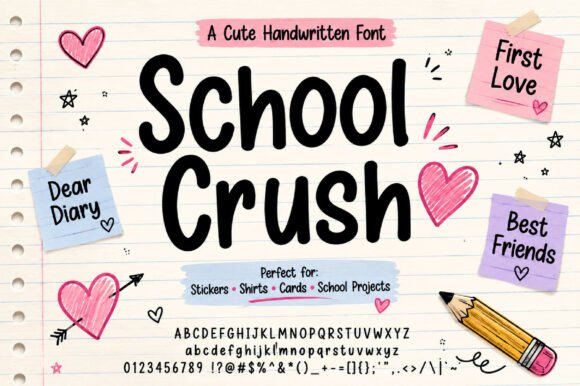
As a graphic designer who lives in the intersection of typography and brand strategy, I often find myself scrolling through endless libraries of Fonts, looking for that one typeface that clicks. When I first loaded School Crush into my design software, the initial impression was immediate. It is a spirited, handwritten display font that embodies a youthful vigor, effortlessly capturing the charm of schoolyard sketches. Unlike many script fonts that feel overly polished or decorative, this one feels alive. It flourishes with its bold strokes and natural imperfections, instantly suggesting a story of creativity and authenticity.
First Impressions on the Logo Draft
I started by typing the client's new business name into a rough logo draft. The difference between using a standard sans serif font and switching to School Crush was stark. The handwritten style immediately softened the brand's edge. The letters seemed to dance across the screen, their varying heights and slant angles mimicking the rhythm of a quick, enthusiastic note scribbled on a napkin. This is exactly what the Script Amp category should achieve: amplifying emotion through type.
However, as any designer knows, excitement can sometimes lead to clutter. My first instinct was to use the font for everything—the logo, the tagline, and even the body copy. But quickly, I realized that School Crush is best utilized as a display font. Its personality is too strong to be diluted by long paragraphs of text. Instead, I reserved it for the headline elements and the primary logo mark. The result was a logo that felt approachable and energetic, perfectly suited for a brand selling handmade goods. It communicated "crafted with care" before a single product description was read.
Testing Visual Hierarchy and Readability
Once the logo concept was solid, I moved on to testing the font in different contexts to ensure it held up under scrutiny. One of the biggest challenges with creative fonts is maintaining readability at smaller sizes. I placed the School Crush typeface on a mockup for a small jar label. At full size, the character was undeniable, but I had to adjust the kerning slightly to ensure the letters didn't collide. The font's open counters and distinct letterforms helped maintain legibility even when scaled down, provided it wasn't used for dense information.
This experience highlighted a crucial lesson for anyone considering a premium font for their brand: context is king. School Crush works beautifully as an accent font or a headline font, drawing the eye immediately. For the supporting text on the packaging, I paired it with a clean, neutral sans serif font. This combination created a perfect balance. The handwritten style brought the warmth and personality, while the structured sans serif ensured that ingredients and nutritional facts were easy to read. This contrast established a clear visual hierarchy, guiding the customer's eye from the fun brand name to the essential details.
Bringing the Brand to Life Across Media
With the core identity set, I began exploring how School Crush would translate across various marketing materials. In the world of social media graphics, where attention spans are short, a unique typeface can be a game-changer. I designed a series of Instagram posts featuring the new snack products. Using School Crush for the overlay text gave the images a dynamic, hand-crafted feel that stood out against the sea of generic, stock-photo-style content. The font's cheerful nature aligned perfectly with the vibrant colors of the product photography, creating a cohesive and engaging feed.
Next, I looked at printed marketing materials. I mocked up a flyer for a launch event. The handwritten quality of the font made the invitation feel personal, as if it were written directly by the founders. It added a layer of intimacy that digital-only brands often struggle to achieve. Even on a larger scale, such as a shop sign or a banner for a pop-up stall, the font retained its impact. The thick strokes of the letters ensured visibility from a distance, while the organic curves invited people closer to investigate.
Strategic Pairing and Design Assets
One of the most satisfying parts of working with School Crush was experimenting with font pairing. While it shines on its own, its versatility increases when combined with the right partners. I found that it pairs exceptionally well with modern typography styles, particularly geometric sans serifs or slab serifs. These pairings ground the whimsy of the script, preventing the overall design from feeling too childish. For editorial design projects, such as a blog post about the brand's history, using School Crush for pull quotes or section headers added a nice rhythmic break to the layout without overwhelming the reader.
When integrating this font into a full brand system, it is also important to consider the technical aspects. School Crush comes with a variety of alternates and ligatures that allow for customization. Being able to tweak specific characters helps avoid repetitive patterns, making the text look more naturally handwritten rather than digitally stamped. Additionally, checking the file formats and commercial font licensing is a non-negotiable step in professional work. Ensuring you have the rights to use the font for web design, merchandise, and print is essential for protecting both the designer and the client.
Final Thoughts on Authenticity and Impact
By the time the project wrapped up, the client was thrilled with the direction. The rebrand felt authentic, capturing the spirit of their handmade products. School Crush had done more than just provide a set of letters; it had infused the entire brand identity with a sense of soul. It proved that a well-chosen typeface can be the heartbeat of a design project, influencing how an audience perceives a business before they even interact with the product.
For fellow designers and entrepreneurs, the takeaway is clear: don't underestimate the power of a spirited display font. Whether you are designing a logo for a boutique, creating labels for a skincare line, or crafting social media assets for a creative studio, finding a font like School Crush can elevate your work from functional to memorable. It invites engagement, fosters connection, and adds a human touch to the digital landscape. As I closed the project files, I knew this font would be a go-to choice for future projects requiring that perfect blend of professional polish and youthful energy.