Script Smooth: A Modern Script Typeface for Web Design
I was staring at a hero section that felt entirely too sterile. The client, a boutique wellness coach, wanted her new landing page to feel approachable and human, but the clean sans-serif headers I had mocked up were doing nothing but shouting "corporate template." I needed something with rhythm, something that could whisper elegance without sacrificing readability on a mobile screen. That is when I pulled Script Smooth into my design workspace.
This typeface immediately changed the mood of the entire layout. As part of the Script Amp category, it promises a balance between modern style and classic grace, and after testing it across various digital environments, I can confirm it delivers exactly that. It isn't just another decorative script font; it is a functional piece of modern typography designed to elevate brand identity in the digital space.
First Impressions in the Hero Section
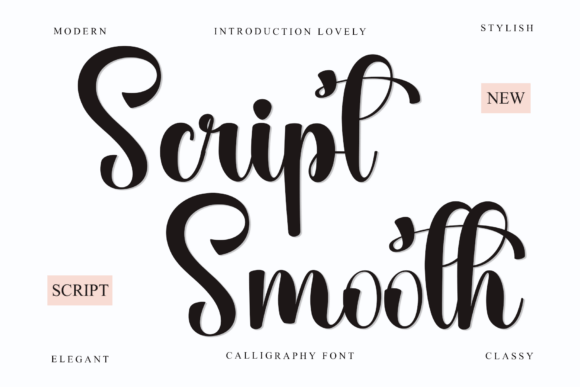
The first place any web designer tests a display font is the hero section. This is where the user forms their initial opinion of the site's aesthetic. When I applied Script Smooth to the main headline, the transformation was instant. The fluid strokes of the calligraphy font added a layer of sophistication that standard geometric fonts simply cannot achieve.
What stood out most was the rhythm. Many script fonts suffer from inconsistent stroke widths or awkward spacing that breaks the eye's flow. Script Smooth, however, maintains a consistent baseline and character weight that feels natural even at large sizes. The ligatures connect seamlessly, creating a sense of movement that guides the reader's eye across the screen. For a coaching website or a creative portfolio, this visual personality suggests care and attention to detail, traits that are essential for building trust with a potential client before they even scroll down.
It works exceptionally well as a logo design element within the navigation bar or as the primary text in a banner image. The contrast between the thick and thin lines adds depth, making the text pop against both light and dark backgrounds without needing excessive drop shadows or gradients.
Readability and Responsive Layouts
A common fear when integrating a script font into web design is how it will behave on smaller screens. If a font is too intricate, it can become an unreadable mess on a smartphone. I tested Script Smooth across desktop, tablet, and mobile viewports, and the results were promising, provided you use it correctly.
This typeface shines when used for short phrases, titles, and key value propositions. In a responsive layout, I found that keeping the font size above 32px on mobile devices ensures the curves remain crisp and legible. The open counters and clear apertures prevent the letters from closing up, which is a frequent issue with high-contrast scripts on low-resolution displays.
However, it is crucial to recognize its limits. Script Smooth is not intended for body copy. Attempting to use it for long paragraphs, blog posts, or product descriptions would result in poor user experience and accessibility issues. It is a premium display font meant to catch the eye, not to carry the weight of dense information. For body text, you must pair it with a highly readable sans-serif font or a simple serif font to maintain a strong visual hierarchy.
Strategic Font Pairing for Digital Brands
The true power of Script Smooth is unlocked through effective font pairing. In web design, the relationship between your display font and your supporting typeface defines the overall tone of the site. Because Script Smooth carries so much character, it needs a partner that steps back and lets it breathe.
For a modern, minimalist look, I paired it with a neutral sans-serif font like Inter or Roboto. The stark simplicity of the sans-serif allowed the elegant curves of the script to take center stage without competing for attention. This combination worked beautifully for a SaaS landing page that needed to feel innovative yet friendly.
Alternatively, for a more editorial or luxury feel, such as a high-end fashion e-commerce site, pairing Script Smooth with a classic serif font created a timeless aesthetic. The serif font provided structure and authority, while the script added a touch of personal flair. This mix is excellent for establishing a sophisticated brand identity. Whether you are designing social media graphics, email templates, or a full course sales page, the versatility of these pairings allows you to adapt the font to different contexts while maintaining consistency.
Performance in Landing Pages and CTAs
Beyond headlines, I experimented with using Script Smooth for call-to-action (CTA) buttons and accent text on landing pages. While bold buttons usually rely on heavy weights, a subtle CTA written in this script font can create a unique sense of urgency that feels inviting rather than demanding.
On a product landing page for handmade jewelry, I used the font for the "Shop the Collection" button text. The handwritten quality made the action feel personal, as if the creator was personally inviting the user to browse. This psychological nudge can significantly impact user engagement and conversion rates by softening the transactional nature of the interface.
However, caution is required here. Ensure there is sufficient padding around the text and that the color contrast meets WCAG accessibility standards. Because script fonts have varying ascenders and descenders, the bounding box of the text can be tricky. Always check your line-height settings to ensure the text doesn't feel cramped inside the button container.
Licensing and Technical Considerations
Before integrating any commercial font into a live website, especially for client projects or online stores, you must verify the licensing terms. Script Smooth is available as a commercial font, but you need to ensure your license covers web usage. Many designers overlook the difference between desktop and webfont licenses.
Check the included file formats. For optimal performance and cross-browser compatibility, you will want access to WOFF2 and WOFF files. These formats ensure fast loading times, which is critical for Core Web Vitals and SEO. Additionally, review the character set. Does it support the languages your audience speaks? Are there enough alternates, swashes, and ligatures to customize the look for specific branding needs?
If you are building a digital template or a theme for sale, the licensing requirements are often stricter. Always read the End User License Agreement (EULA) carefully to avoid legal pitfalls. Using a font in a way that violates its license can jeopardize your business and your professional reputation.
When to Avoid Script Smooth
While Script Smooth is a fantastic asset, it is not a one-size-fits-all solution. There are specific scenarios where this font should be avoided. First, do not use it for navigation menus, form labels, or footer links. These elements require high legibility and quick scanning, which a decorative script cannot provide.
Secondly, avoid using it in data-heavy interfaces like dashboards or admin panels. In these environments, clarity and efficiency are paramount. A script font introduces unnecessary cognitive load and distracts from the core functionality.
Finally, be mindful of background complexity. While the font looks great over solid colors or subtle gradients, placing it over a busy, high-contrast photograph can make it vanish. If you must use it over an image, apply a subtle overlay or shadow to ensure the text remains distinct.
In conclusion, Script Smooth is a versatile addition to any web designer's toolkit. It bridges the gap between formal typography and personal expression, making it ideal for brands that want to stand out in a crowded digital landscape. By respecting its limitations and leveraging its strengths in headers, accents, and strategic pairings, you can create digital experiences that are not only visually stunning but also deeply engaging for your users.